Logistics industry held back by poor infrastructure, technology

Logistics industry held back by poor infrastructure, technology

Despite its great potential for growth, poor transport infrastructure and high costs are holding back the logistics industry, insiders said.

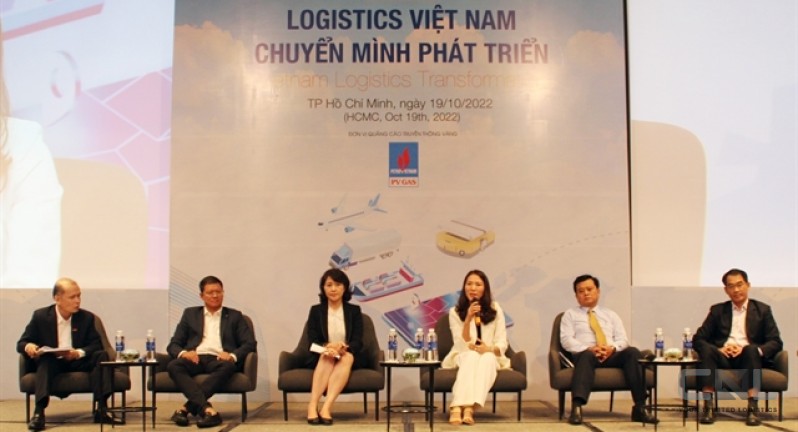
Panelists speak at the Việt Nam Logistics Transformation forum in HCM City on Wednesday. VNA/VNS Photo


HCM CITY — Despite its great potential for growth, poor transport infrastructure and high costs are holding back the logistics industry, insiders said.A young and growing population of around 100 million people, stable and supportive Government policies, extensive trade agreements with other countries, and favourable trends in manufacturing, exports and domestic consumption were driving logistics services, Chih Cheung, founding managing partner at SLP Vietnam, said.

Logistics costs represented 20 per cent of GDP in Việt Nam while it was 7-9 per cent in mature markets, he told the Việt Nam Logistics Transformation forum held in HCM City on Wednesday.

Việt Nam ranks 11th out of 50 countries in the 2022 Emerging Market Logistics Index released by logistics and freight provider Agility. 

Việt Nam’s freight and logistics market is expected to grow at a compounded annual growth rate of 5.5 per cent in 2022 – 2027.

Its economy has posted a strong recovery this year, growing at 8.93 per cent in the first nine months.

Its foreign trade was worth US$557 billion in the period, representing a large freight and logistics market.

A total of 30,000 logistics companies operate in the country, of which Vietnamese small- and medium-sized ones account for 89 per cent, joint-venture companies for 10 per cent and foreign companies for 1 per cent.

Đào Trọng Khoa, deputy chairman of the Việt Nam Logistics Business Association, said the logistics industry was benefiting from free trade agreements and the rapid growth of e-commerce.

E-Logistics had leveraged the efficiency of logistics services, he said.

However, the country’s logistics landscape was still fragmented and a master plan to attract investment and develop infrastructure to fully tap its potential was urgently required, he said.

Most domestic businesses were small or medium-sized with limited capital, technology and automation, and face fierce competition from foreign companies.

They only had a 30 per cent market share with the remaining 70 per cent held by foreign businesses, he said.

But domestic businesses were increasingly investing in infrastructure, modern warehousing and technology to increase their market share, he added. —VNS


vietnamnews.vn
Ý kiến bạn đọc
Chủ đề liên quan
Có thể bạn sẽ quan tâm

Efficiency advances in logistics only accessible with digitalisation

With Vietnam’s logistics industry estimated at $80 billion and with an increase of 14-16 per cent annually, the adoption of digital transformation and automation is expected to drive more efficiency in the sector.

Regional linkages to enhance the value of Vietnamese goods in the supply chain

The logistics service chain linking product consumption and distribution is a bottleneck, hindering the growth of the southern key economic region.

Proposal to invest in dry ports in the form of PPP

As a later type of development than seaports, but currently dry ports are interested in investing in areas and transport corridors with large container cargo traffic.

Low imports cause Gasoline shortage

The current partial shortage of gasoline and oil has been caused by wholesalers not importing sufficient amounts, says said Deputy Minister of Industry and Trade Do Thang Hai.

CNL Handled a POWER TRANSFORMER 20/30MVA and OIL-SHELL TR OIL DIALA S4 ZX-I to Brunei.

In July 2022, CNL's Hanoi branch handled a consignment including a POWER TRANSFORMER 20/30MVA weighing approximately 45 tons, as well as its accompanying equipment, and 31 pallet barrels of OIL-SHELL TR OIL DIALA S4 ZX-I.

Chu Lai port strongly develops bulk import and export services

After the pandemic, the wave of supply chain shift to Vietnam is opening up opportunities to develop large production areas across the country, including the Central - Central Highlands, leading to great demand for logistics in this region.

VIMC plans to divest from big seaports

CMSC recommended that VIMC divest capital in seaport enterprises, but only to a 65 per cent ownership rate.

Terms on the bill of lading to know

Bill of lading (B/L) refers to bill of lading as a freight bill of lading, which is considered as a...

Ba Ria - Vung Tau: Industrial development associated with seaport advantages

Thanks to the advantage of Cai Mep - Thi Vai deep-water port cluster, over the years, the industry of Ba Ria - Vung Tau province has made great progress, becoming one of the 4 stable economic pillars of the province. With the promotion of the implementation of key transport routes linking the region, in the coming time, the province's industry is expected to give more sweet fruits.

8 Golden rules when loading and transporting goods by container

PRINCIPLE 1: CLEAN THE CONTAINER, DEODORIZE BEFORE LOADING THE CONTAINER There are many items that are smelly, and a lot...