VIMC plans to divest from big seaports

VIMC plans to divest from big seaports

CMSC recommended that VIMC divest capital in seaport enterprises, but only to a 65 per cent ownership rate. 

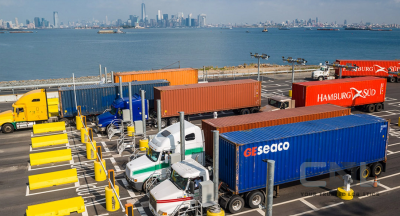
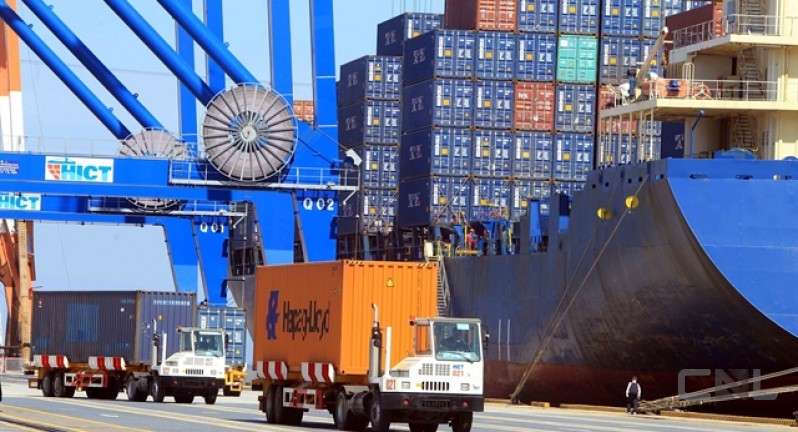
Trucks carrying containers at Hải Phòng port. VNA/VNS Photo


HÀ NỘI — Vietnam National Shipping Lines (VMIC) has completed the corporation's restructuring scheme draft for 2021–2025 and sent it to the related ministries and agencies for comments. VIMC proposes reducing the parent company's state ownership rate from 99.4 per cent to 65 per cent.However, the Committee for the Management of State Capital (CMSC) at Enterprises, a representative of state capital at VIMC, said that seaports are an important component of the maritime industry, a strategic breakthrough in infrastructure. 

VIMC proposes reducing the parent company's capital ownership ratio in member enterprises operating seaports.

Specifically, VIMC suggested reducing the capital ownership of the parent company in five ports to 51 per cent. These ports are Cần Thơ Port (with 99 per cent of the capital), Cam Ranh Port (nearly 81 per cent), Quy Nhơn Port (75 per cent), Đà Nẵng port (75 per cent), Cái Lân port (56 per cent).

For Hải Phòng port, VIMC proposes to reduce the equity ratio from 92.5 per cent to 65 per cent and divest all capital in Việt Nam Hi-tech Transportation Company Limited, where VIMC is currently holding 56 per cent of the capital.

CMSC said that VIMC's member businesses are holding large, important seaports and doing business effectively. In 2021, the profit before tax of port businesses was nearly VNĐ2.6 trillion (US$104.6 million), accounting for 71 per cent of VIMC's consolidated profit, which was mainly from Sài Gòn, Quy Nhơn, Hải Phòng, and Đà Nẵng Port.

CMSC recommended that VIMC divest capital in seaport enterprises, but only to a 65 per cent ownership rate.

As for VIMC's member businesses in shipping, maritime services, and logistics industries, VIMC proposes to divest all capital the company holds in most of these companies, including Oriental Shipping and Trading JSC, Vietnam Sea Transport and Chartering JSC, and Đông Đô Marine JSC.

In the case of Vinaship and VIMC Logistics, VIMC proposed divesting a portion of each company, keeping only 36 per cent of the shares in each.

CMSC agreed with VIMC's proposal on the divestment of member enterprises in the fields of shipping, maritime services, and logistics.

For shipping enterprises, this Committee said that the units mainly operate bulk carriers with a long service life (over 20 years on average), so operating costs are high, and some businesses suffer long-term losses. — VNS


vietnamnews.vn
 

Ý kiến bạn đọc
Chủ đề liên quan
Có thể bạn sẽ quan tâm

Chu Lai port strongly develops bulk import and export services

After the pandemic, the wave of supply chain shift to Vietnam is opening up opportunities to develop large production areas across the country, including the Central - Central Highlands, leading to great demand for logistics in this region.

Terms on the bill of lading to know

Bill of lading (B/L) refers to bill of lading as a freight bill of lading, which is considered as a...

By 2025, the ICD could handle up to 8.7 million tons of cargo.

By 2025, develop a dry port system capable of approving about 20% - 30% of the demand for import and export container transport with a total capacity of about 6 - 8.7 million Teu / year.

Ba Ria - Vung Tau: Industrial development associated with seaport advantages

Thanks to the advantage of Cai Mep - Thi Vai deep-water port cluster, over the years, the industry of Ba Ria - Vung Tau province has made great progress, becoming one of the 4 stable economic pillars of the province. With the promotion of the implementation of key transport routes linking the region, in the coming time, the province's industry is expected to give more sweet fruits.

Long An develops border trade infrastructure

Enterprises believe that there should be mechanisms and policies to promote investment in border areas; At the same time, it is necessary to focus on investing in the development of transport infrastructure and smooth connectivity for trade.

Vietnamese logistics increases competitiveness, reduces costs

TTO - Lack of professionalism, low automation, productivity of service implementation has not reached advanced countries, the application of information technology and the level of digitalization is not high, leading to reduced competitiveness compared to the international market.

Local logistics industry aims for green development

Việt Nam needs solutions to develop green logistics to take advantage of free trade agreements (FTAs), especially new generation FTAs to help the industry develop, support market expansion and promote exports.

Low imports cause Gasoline shortage

The current partial shortage of gasoline and oil has been caused by wholesalers not importing sufficient amounts, says said Deputy Minister of Industry and Trade Do Thang Hai.

Global shipping growth at risk from economic gloom, UNCTAD says

Synopsis The slowdown is expected to impact shipping, which transports more than 80% of global trade, although tanker freight rates could stay high.

Hanoi establishes Logistics Association

On 12/11, Hanoi Logistics Association held the first Congress for the term 2022-2025.