The / contract uses two types of containerization:
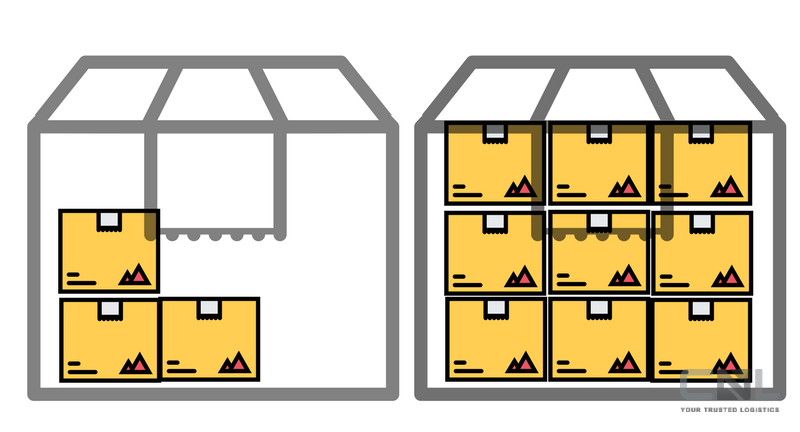
- (Full Container Load), or full container: the client’s goods are transported in a filled and sealed container;
- (Less than Container Load) or grouped : the client’ goods are not numerous enough to fill a container, the goods of several clients are put into one container.
Other than /, there are other modes of :
-
/: the expediter’s package travels in a container, then delivered to the recipient;
- /: the packages of several expediters are grouped in a single container to be delivered to one recipient;
- /: the packages of several expediters are grouped into one container then separated at destination to be delivered to several recipients.
The choice of expedition mode: FCL or LCL
The choice of mode is very important in financial respects, since the expediter must always aim to minimize the cost of transport. For example, the choice of grouped () allows cost savings if the goods do not fill a container (less than 15 cubic meters). The mode also allows savings on by shipping smaller volumes more frequently.
However, the security factor must also be considered. With grouped , loading/unloading operations (breaking bulk) are higher in number, which could generate damage, loss or theft of goods. Clients in need of secure transport prefer to use single containers (). This mode of transport excludes breaking bulk, the container is sealed after initial loading and will not be opened until arrival at destination.
Examples and practical applications
FCL/LCL shipments in practice
The containers used in loading meet ISO standards specifications with dimensions – width 8 feet and length 20, 30 or 40 feet.
The client is invoiced per cubic meter or per ton, according to the ship. The mode is generally cheaper than the mode. provides less handling operations for transporters. According to this mode, delivery is also faster since there is no grouping or separation of goods to carry out, which could lead to delays. The price of the mode changes quickly, especially in function of available space on ships.
The client can call on the services of a for of his goods. The is responsible for finding the most efficient transport solution. He chooses the different modes of transport, executes consolidation (grouping and separating), transshipping and manages all formalities.
The different stages of FCL/LCL shipment:
-
The consignment is transported by truck to the port of departure.
- The goods go through .
- The packages are unloaded from the truck then loaded into a container.
- The container is loaded onto the cargo ship.
- The cargo ship arrives at the destination port in China.
- At port, the container is unloaded.
- The container is opened, and the packages are separated according to the different recipients.
- The packages are delivered by truck to the different supermarkets.
Source: www.gefco.net