Through the implementation of trade promotion activities, most African countries highly appreciate and trust the quality of many food products of Vietnam.

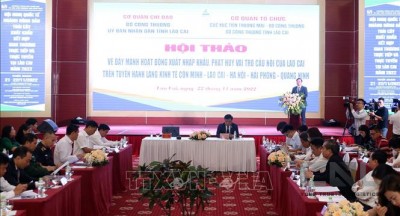
Vietnam-Africa Food Online Trade Conference 2022 will take place on 14-15/6. Photo: source Ministry of Industry and Trade
In order to support localities, enterprises and food supply cooperatives of Vietnam to find partners, connect business opportunities and export food to African markets, in 2 days 14-15/6, the Vietnam Trade Promotion Agency (Ministry of Industry and Trade) will organize the Vietnam - Africa Food Online Trade Conference 2022.
According to the Ministry of Industry and Trade, the conference will include plenary sessions and business trading sessions. At the plenary session, representatives of a number of Vietnamese Trade Offices in African countries will introduce the potential, demand and opportunities for other Vietnamese foods, fish and seafood in the African market.
After the plenary session, there will be online trading sessions between Vietnamese and African enterprises. This is a good opportunity for Vietnamese food enterprises to introduce and promote their businesses and products, develop more potential customers. In addition, the conference is also an opportunity for food exporters to thoroughly understand the market requirements and technical barriers of African countries.
Through the implementation of trade promotion activities, most African countries highly appreciate and trust the quality of many food products of Vietnam.
In particular, the African market also needs to import a variety of foods to serve the rapidly growing population and improving incomes, while offsetting the serious impacts on production caused by the COVID-19 epidemic.
Ministry of Industry and Trade said that countries deep in the African continent affected by the desert climate in West and Central Africa are very difficult in terms of cultivation, food production, so the demand for imports is very large.
Therefore, there is still a lot of room for export development for Vietnam's food products to the African market, especially those with large consumer demand, africa's intra-regional production is not enough to meet such as products processed from coffee, pepper, rice ...
However, in order to export goods, especially food products, to Africa, businesses face many difficulties such as the problem of transporting and preserving goods suitable for moving over long distances, many procedures and rules in trade of most African countries are still undeveloped.
Therefore, businesses need to invest in carefully researching market needs, finding items that not only meet market needs but also solve problems related to logistics stages for food products.
Among Vietnam's main exports to Africa, rice has the largest turnover accounting for 20% of Vietnam's total exports to this market and also has the potential to increase exports. Notably, coffee, pepper... also potential items.
Despite the great demand, according to experts, when doing business in the African market, businesses need to carefully understand the business practices of the market as well as legal regulations to avoid risks.
On the other hand, enterprises also determine that Vietnamese goods also have to compete with similar products of many other Asian countries such as China, Thailand, Indonesia.
Uyen Huong/BNEWS/TTXVN