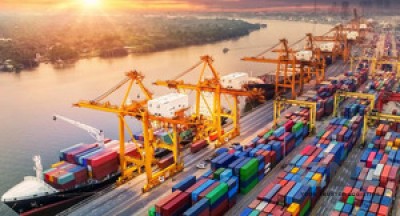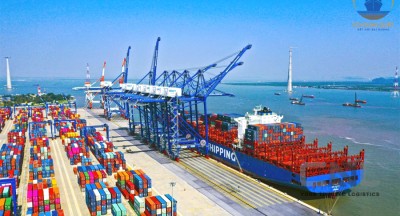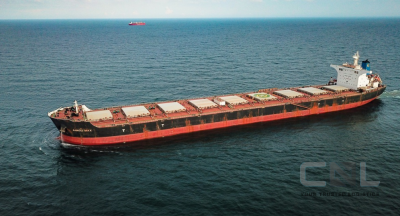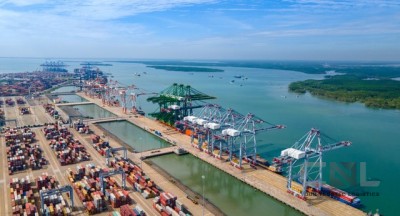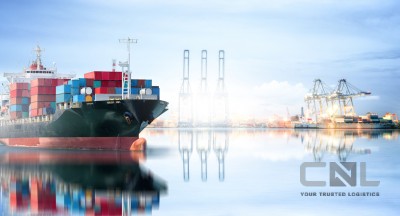

A corner of Nam Hai Dinh Vu Port. Artwork: An Dang/VNA
Up to 59% of businesses need to be trained in knowledge of guidelines for building and applying advanced management systems: ISO 9001, ISO 14001, ISO 17025, HACCP, ISO 22000 ... Therefore, most logistics enterprises propose to have a set of national standards dedicated and suitable for small and medium enterprises or road gauge standards; standards for containers, specific standards for dangerous goods, standards for vehicles using electric energy ...
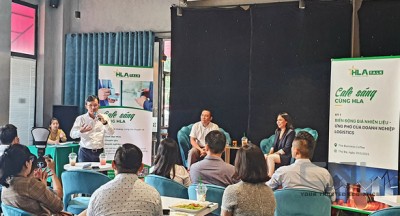
Mr. Le Duy Hiep, Chairman of VLA, said that in recent years, the Vietnam Logistics Service Enterprises Association has been developing a set of OS/OSS professional standards for job positions in the logistics industry and researching and developing a set of work standards "Dangerous goods specialists", is expected to launch the community in April. This will be an important basis for the training, recruitment and development of employees of the logistics industry.
According to a representative of the World Bank (WB), over the past years, Vietnam's logistics indicators related to customs, infrastructure, international transport, logistics capacity, tracking and tracing as well as logistics service implementation time have all improved positively. This further demonstrates the stronger development of Vietnam's logistics industry. Currently, the World Bank is using the National Logistics Competency Index (LPI) scale to comprehensively measure logistics capacity. In 2018, Vietnam's LPI index has improved, from ranking 5th out of 10 ASEAN countries with 2.96 points to 3rd (behind Singapore and Thailand) with 3.27 points.Towards 2025, Vietnam's logistics industry aims to strive to achieve the contribution of the industry to GDP of about 5% - 6%, the growth rate of logistics services reaches 15% - 20%, the rate of outsourcing logistics services reaches 50% - 60%, logistics costs will decrease to the equivalent of 16% - 20% of GDP, ranked according to the LPI Index in the world reaching 50th or higher.
Mr. Le Duy Hiep, Chairman of VLA, said that in recent years, the Vietnam Logistics Service Enterprises Association has been developing a set of OS/OSS professional standards for job positions in the logistics industry and researching and developing a set of work standards "Dangerous goods specialists", is expected to launch the community in April. This will be an important basis for the training, recruitment and development of employees of the logistics industry.
According to a representative of the World Bank (WB), over the past years, Vietnam's logistics indicators related to customs, infrastructure, international transport, logistics capacity, tracking and tracing as well as logistics service implementation time have all improved positively. This further demonstrates the stronger development of Vietnam's logistics industry. Currently, the World Bank is using the National Logistics Competency Index (LPI) scale to comprehensively measure logistics capacity. In 2018, Vietnam's LPI index has improved, from ranking 5th out of 10 ASEAN countries with 2.96 points to 3rd (behind Singapore and Thailand) with 3.27 points.Towards 2025, Vietnam's logistics industry aims to strive to achieve the contribution of the industry to GDP of about 5% - 6%, the growth rate of logistics services reaches 15% - 20%, the rate of outsourcing logistics services reaches 50% - 60%, logistics costs will decrease to the equivalent of 16% - 20% of GDP, ranked according to the LPI Index in the world reaching 50th or higher.
To achieve these goals, the logistics industry requires the introduction of regulations on regulations and quality standards to play an important role in ensuring the quality of logistics services, ensuring the quality of goods and services and ensuring that goods are circulated easily. The fact that regulations and standards are highly similar to international regulations and standards contributes to facilitating the easy circulation of goods in the import and export market.
Standardization helps businesses cut costs through improving their logistics systems and processes that increase the competitiveness of the logistics chain, thereby increasing customer satisfaction through improving safety, quality and logistics processes. Since then, the standardization of human resources is also essential. The evaluation of employees is an indispensable job of the business, playing an important role in managing the staff in the working process.
Facing that practice, the representative of The Nam Logistics Service Business Association said that Vietnamese logistics enterprises need to invest in perfecting the logistics service quality management model to help the stages in the service implementation process take place in a simpler and more secure way. In addition to choosing to apply the world's advanced quality management model such as ISO, SERQUAL or TQM,... Vietnamese logistics enterprises need to complete the functions of organization, inspection, control and adjustment; In particular, businesses need to make employees implementing the plan clearly know the goals, needs and content of the work that they have to do.
Along with the development trend of the logistics industry and the era of Industry 4.0, innovative logistics services increase, requiring higher quality of human resources. The standardization from training - recruitment - employers will avoid waste for society, making the use of labor more efficient. Therefore, the development of a set of professional standards is necessary and requires enthusiastic participation and support from state - school - business stakeholders.
Standardization helps businesses cut costs through improving their logistics systems and processes that increase the competitiveness of the logistics chain, thereby increasing customer satisfaction through improving safety, quality and logistics processes. Since then, the standardization of human resources is also essential. The evaluation of employees is an indispensable job of the business, playing an important role in managing the staff in the working process.
Facing that practice, the representative of The Nam Logistics Service Business Association said that Vietnamese logistics enterprises need to invest in perfecting the logistics service quality management model to help the stages in the service implementation process take place in a simpler and more secure way. In addition to choosing to apply the world's advanced quality management model such as ISO, SERQUAL or TQM,... Vietnamese logistics enterprises need to complete the functions of organization, inspection, control and adjustment; In particular, businesses need to make employees implementing the plan clearly know the goals, needs and content of the work that they have to do.
Along with the development trend of the logistics industry and the era of Industry 4.0, innovative logistics services increase, requiring higher quality of human resources. The standardization from training - recruitment - employers will avoid waste for society, making the use of labor more efficient. Therefore, the development of a set of professional standards is necessary and requires enthusiastic participation and support from state - school - business stakeholders.